What makes the best analytical balance is rather subjective, based entirely on what your laboratory needs to do its work most effectively. However, there are a few features we recommend not going without – 10 of them, to be exact. Let’s discuss.
1. Readability and Resolution
Readability represents the smallest increment your analytical balance can display. Analytical balances typically offer very fine readabilities of 0.001g or 0.0001g, while semi-micro balances can read up to 0.01mg. The best readability for you will be one that is slightly more precise than you might expect is necessary. For example, if you need 0.001g results, lean towards a readability of 0.0001g, so you know your 0.001g readings are spot on. You likely wouldn’t want to go more than a decimal place beyond what’s required. Though it can be tempting to go as fine as possible, this decision must be balanced with the risks of higher sensitivity, which can make it more difficult to get the results you need.
Resolution is a bit more complicated. It represents the balance’s ability to distinguish between small changes in weight across its full capacity. To calculate a balance’s resolution, all you do is divide the capacity by the readability. A balance with a readability of 0.0001g and a 120g capacity would have a resolution of 1,200,000.
It’s easier to purchase the best analytical balance based on readability than it is to purchase based on resolution, as readability is typically way more obvious and provided front and center, and is usually more important when making a purchasing decision. Adam’s new offer resolutions between 8,000,000 (PAB 125i) and 4,200,000 divisions.
2. Maximum Capacity
Capacity is the most limiting part of an analytical balance – an extremely fine readability is typically paired with a lower capacity. This means that the combination of your samples and the container they’re held in must be below the maximum capacity. Exceeding the capacity by a significant amount of weight or for a significant amount of time can begin to harm your balance’s internal mechanisms.
When searching for the best analytical balance for you, keep in mind that you’ll want a buffer between the heaviest item you expect to weigh and the maximum capacity. We recommend at least a 25% gap. This helps prevent any unintentional overloads and gives you some extra leeway should you acquire some heavier samples or containers later.
Adam’s Polaris and both offer semi-micro analytical models, where one balance provides both 0.01mg semi-micro and 0.1mg analytical results (The PAB 125i, EAB 125i & EAB 225i). You’ll receive semi-micro results until the weight on the pan surpasses a certain level, whereafter you’ll receive four place results. These models also boast a “floating range” feature to help compensate for the low semi-micro capacities. You can learn all about it in our blog.
3. Calibration Options
Consider how you prefer to calibrate, which will help when choosing the best analytical balance for you. External calibration using calibration weights is considered more traceable but requires your time and participation.
Internal calibration can be scheduled to perform automatically when the balance is not in use, which saves time, but which is considered harder to regulate. It can also be set to calibrate automatically when the temperature changes. Plus, balances that can be internally calibrated can also be externally calibrated when necessary, so you can get both traceability and time-savings when either is more important, lending flexibility.
All Adam analytical balances indicate whether they can be internally or only externally calibrated in the model name. Those that can be internally calibrated have models ending with an “i”, while those that can only be externally calibrated end with an “e”. Instantly easy!
4. Connectivity
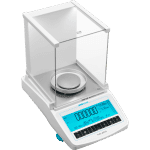
We live in an ultra-connected world, so the best analytical balance for you would be no exception. Adam’s new Polaris analytical balances offer a full range of interfaces, built in: Ethernet, WiFi, RS-232, USB and Bluetooth. This allows you to connect your balance to printers, PCs, data analysis software, a Laboratory Information Management System (LIMS) and more. This allows for better data tracking and traceability. Your balance should work for you!

5. Convection Current Protection
Because analytical balances are very sensitive, they require protection against environmental factors that could lead to inaccuracies. These environmental factors include changes in temperature that could cause convection currents within an analytical balance’s draft shields. Adam’s new Polaris semi-micro model, the PAB 125i, offers advanced Air Diversion Technology (ADT). As the balance warms up over use, this heat can rise and begin to push at the weighing pan from below. The ADT prevents this, redirecting more than 90% of the heat away from the weighing pan and ensuring your results are protected.
6. Stabilisation Time
Stabilisation time is how long it takes until your analytical balance has reached its best result. These are typically measured in seconds, with stabilisation taking slightly longer the finer the balance. The best analytical balance for you is one with a stabilisation time that doesn’t hold you up. Adam’s Polaris Analytical balances stabilise within three seconds.
Never record a weight before you see the “~” symbol on the screen representing a stabilised result, as this means the weight could change and your records may be inaccurate.
7. Ease of Use
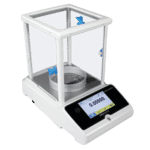
An analytical balance that is difficult to use wastes your time and increases the chances of using it incorrectly. The best analytical balance provides you with an intuitive, easy-to-use interface that helps guide you toward the applications you want to use. The Equinox, as a touchscreen, is especially intuitive, as what you touch is where you go. The Polaris, though not a touchscreen, is also highly intuitive, with multiple dual-use buttons and an expansive display.
8. Compliance & Traceability
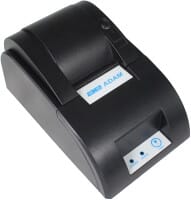
Adam analytical balances are Good Laboratory and Good Manufacturing Practices compliant, which means they record information like the exact date and time the result was captured, and by which operator. When printing these results on an accessory like the , all of that information is recorded as well.
This helps keep your data completely traceable, which is critical in the pharmaceutical industry for protecting patient safety and equally as important for ensuring reproducible data in research.
9. Weighing Units
You might be surprised just how many weighing units there really are – we have a list of them, right here. Depending on the type of work you do with your analytical balance, the weighing units available on your machine are going to be of great concern.
For example, though grams, milligrams, pounds and ounces are most popular, jewellery appraisers and gemologists need carats. Explosive and ballistics technicians require Grains, traditionally used to measure gun powder, while physics and engineering labs use Newtons to study the effect of force on small samples.
Adam’s Polaris offers 16 different weighing units, including one that’s entirely customisable for the days you’re looking to get out-of-the-box.
10. Warranty & Support
You deserve peace of mind, so the best analytical balance for you will be one with a long, effective warranty and after-sale support you can rely on. All Adam analytical balances boast five-year manufacturer warranties, one of the highest in the industry. Not only this, our after-sales support is unmatched. Whether you have a question, you need product guidance, calibration or repairs, Adam’s service team is just a call away.
Interested in purchasing the best analytical balance for you? Contact the Adam team, we’d love to help.