

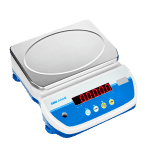
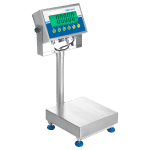
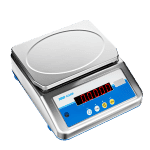
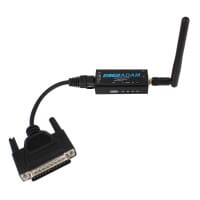

are the number one tool for harsh food environments. Why is that, and how do you choose a washdown scale? Let’s discuss.
Why Moisture and Dust Can Be a Problem for Weighing Equipment
Moisture and powders aren’t your typical weighing scale’s best friends. For machines without built-in protection, you’ll want to be extra careful. Powders like dust, flour or sugar can get inside cracks and crevices and can compromise the connection between the weighing pan and the load cell. At the same time, liquids like water, syrup or oil can cause short circuits, which means your scale is out of commission.
In a food environment, it’s almost guaranteed that your scale will come into contact with some form of liquid or powdery substance. Your weighing scale needs to offer protection against damage from liquids and powdery solids to survive in a food environment.
What is a Washdown Scale?
A washdown scale is a scale with an Ingress Protection (IP) rating. When a scale is IP rated, that means it’s been tested for how well it handles liquid at different amounts, pressures and depths as well as the intrusion of progressively smaller solid particles. It’s then given a two-number rating, with the first number representing solids (0 to 6) and the second representing liquids (0 to 9). The higher the number, the better the protection.

Adam offers IP67 and IP68-rated washdown scales that are ideal for professional kitchens and food production environments in our Aqua and ranges. The IP67-rated and the IP68-rated and Gladiator are completely protected against ingress from fine powders and against liquid ingress when submerged.
To learn more about each individual level, you can download our infographic on IP ratings here.
How Do Washdown Scales Help?
Let’s get into why you should even bother with a washdown scale in a harsh food environment.
Enable Frequent Cleaning
Food environments get messy. It just happens, and when it happens, you need to be able to clean your scale effectively. If your scale isn’t cleaned well enough, you risk bacterial growth and cross-contamination. Washdown scales can handle water and cleaning products so you can really scrub and eliminate bacteria.
Reduce Downtime & Maintenance
When non-washdown scales are exposed to liquids or fine particles, there’s the chance that they’ll break. For hectic food environments, it can be a huge inconvenience to be one scale down while it’s being repaired. Investing in a washdown scale prevents this downtime, as they’re significantly less likely to break from a simple spill!
How Stainless-Steel Washdown Scales Help Maintain Hygiene
Many washdown scales have stainless steel components. Adam washdown scales are constructed from 304 stainless steel, with the IP67-rated Aqua ABW series offering a stainless-steel pan, while the IP68-Rated Aqua ABW-S and Gladiator series boast full stainless-steel construction.
Why does this matter? Because not all stainless steel is made equal, and 304 stainless steel is naturally resistant to bacteria. It’s smooth, extremely resistant to corrosion and non-porous. There’s not much for bacteria to cling to, and thus it’s easier to remove when cleaning. Cleaning is already crucial – stainless steel helps you save time and energy on the process.

Check out our blog on the different types of stainless steel here.
Supporting Food Safety Requirements
Adam’s IP67 and IP68-rated scales are NSF-approved, meeting all NSF (National Sanitation Foundation) requirements for being used to weigh food products. To get NSF approval, Adam’s washdown scales were proven to be sealed against water and smooth in a way where cracks, crevices and holes don’t harbour bacteria. They’re also constructed from NSF compliant materials like ABS plastic and stainless steel.
NSF approval just means more peace of mind when it comes to using an Adam washdown scale to weigh food products.
Beyond Safety – Features to Make Life Easier
These features aren’t exclusive to washdown scales, but when a washdown scale has these features, they certainly make life easier. Such as:
Checkweighing
Checkweighing is the ability to set a high or low weight limit on your scale so that it will notify you when items on the pan are above, within or below those limits. Checkweighing is ideal for quality control in food production, helping to ensure consistency from product to product. Adam’s Aqua ABW and ABW-S both feature a checkweighing function with hidden till necessary traffic-style indicators on the display. Meanwhile, the Gladiator series offers a fully colour-changing backlight for easy and quick visibility.

Rechargeable
If a weighing scale is rechargeable, that means it’s portable! You can take the scale anywhere you need it to be, even when it’s not by an outlet. The Aqua ABW, ABW-S and Gladiator are all rechargeable.
Rear Displays
On busy production floors, sometimes there’s not a lot of space for each person to have their own scale to use. Luckily, Adam’s Aqua ABW and ABW-S both feature rear displays. That way, a person can use the scale from the front and the back and receive accurate results.
Connectivity
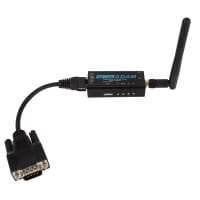
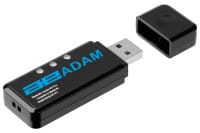
Adam Gladiator scales offer RS-232 interfaces for connecting with printers or PCs to relay weight data. It’s also compatible with Adam’s new relay method for providing Bluetooth connections to scales that don’t otherwise provide it. This can make tracking data easier over time. Just remember to disconnect before washing down!
Choosing a Washdown Scale for Food Processing
So, in summary, what should you look for in a food processing scale?
- IP67 or IP68 rating
- Stainless steel construction
- NSF approval
- Features that make life easier
- Checkweighing
- Rechargeable battery
- Rear display
- Connectivity
Need help finding the best washdown scale for food processing? Adam can help you find the answers. Contact us now.